



Introduction: Why SPF Choice Matters in the Indian Climate
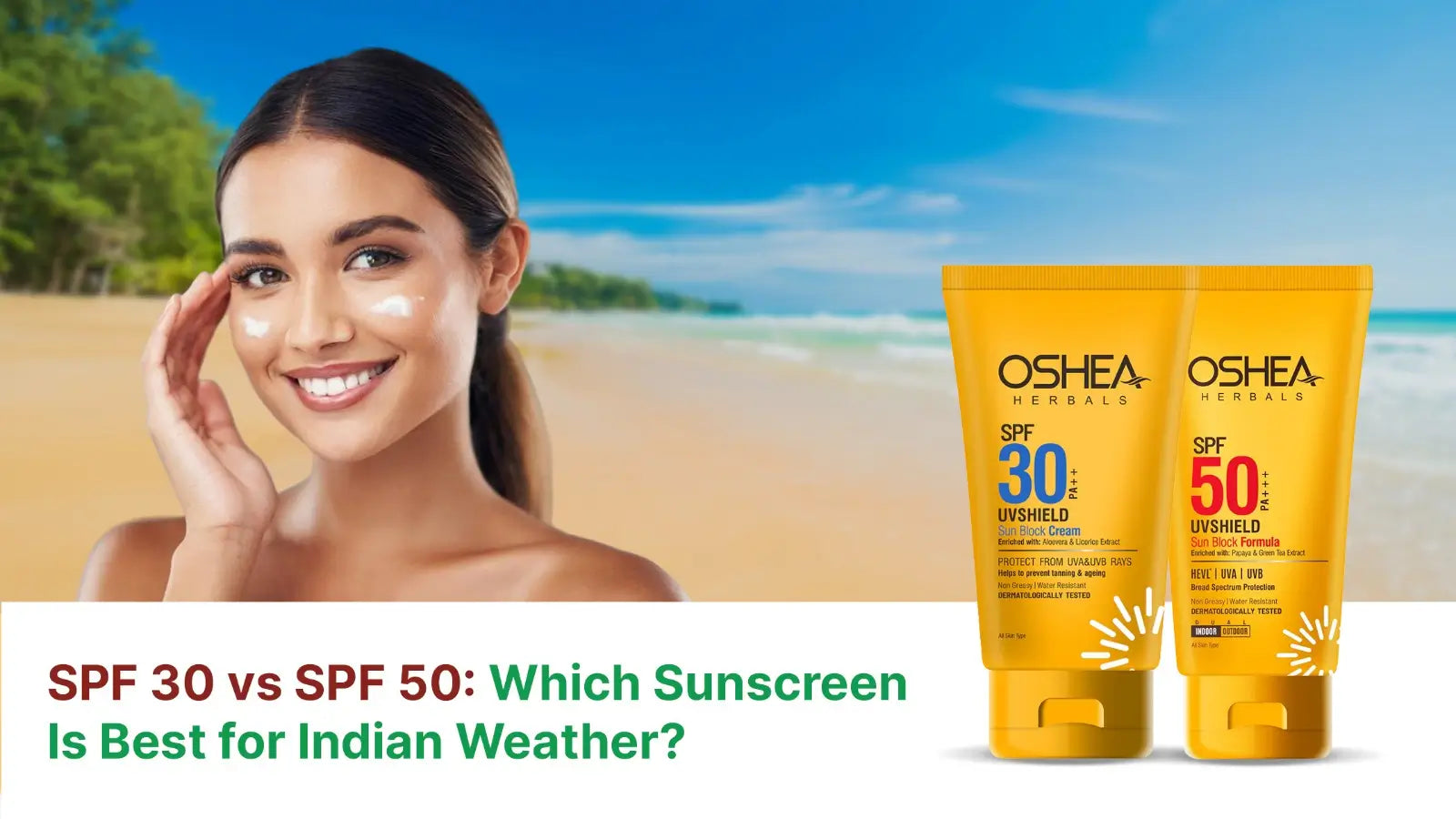
Indian weather is defined by intense sunlight, prolonged outdoor exposure, high humidity, and rising pollution levels. These factors significantly increase ultraviolet stress on the skin. Choosing between SPF 30 and SPF 50 is not just a numbers game. The right UV shield sun block determines how well the skin defends itself against tanning, pigmentation, premature aging, and long-term sun damage.
Understanding UV Radiation in India
India receives high levels of UV radiation throughout the year, even during the monsoon and winter months. UVA rays penetrate deeply, accelerating photoaging, while UVB rays cause sunburn and visible damage. A reliable UV shield sun block must address both forms of radiation to be effective in Indian conditions.
What SPF Really Means for Skin Protection
SPF indicates how well a sunscreen protects against UVB rays. SPF 30 blocks approximately 97% of UVB radiation, while SPF 50 blocks around 98%. The difference may seem small numerically, but under prolonged exposure, it becomes significant. A well-formulated uv shield sun block ensures consistent protection beyond theoretical SPF values.
Broad-Spectrum Protection Explained
Broad-spectrum sunscreens protect against both UVA and UVB rays. Without UVA coverage, even high SPF products leave the skin vulnerable to serious cellular damage. An effective UV shield sun block focuses on comprehensive protection rather than SPF strength alone.
What Is SPF 30 Sunscreen
How SPF 30 Performs Under Daily Sun Exposure
SPF 30 offers reliable protection for short-to-moderate sun exposure. It is suitable for daily commuting, brief outdoor activities, and indoor lifestyles with limited sun contact. When formulated as a uv shield sun block, SPF 30 can effectively prevent tanning and mild sun damage with proper reapplication.
Who Should Choose SPF 30
SPF 30 suits individuals who spend most of their time indoors or experience minimal sun exposure. It works well for normal to dry skin types when paired with a lightweight UV shield sun block formula that supports comfort and breathability.
What Is SPF 50 Sunscreen
How SPF 50 Works in High UV Conditions
SPF 50 provides enhanced protection during prolonged sun exposure. Beaches, outdoor work, sports, and travel demand higher UV defense. In such scenarios, an SPF 50 uv shield sun block offers a stronger safety margin against sunburn and pigmentation.
Who Benefits Most From SPF 50
SPF 50 is ideal for oily, acne-prone, and sensitive skin exposed to harsh sunlight. Indian summers, in particular, amplify UV intensity, making SPF 50 uv shield sun block formulations a safer option for extended outdoor use.
UV Shield Sun Block: Why It Matters More Than SPF Alone
SPF values do not account for sweat, pollution, or friction. A true UV shield sun block combines UV filters with film-forming agents that ensure even coverage and durability. This protective shield becomes critical in humid Indian weather, where sunscreen breakdown occurs rapidly.
SPF 30 vs SPF 50: Key Differences in Real-World Use
In controlled environments, SPF differences appear minimal. Outdoors, however, SPF 50 maintains protection longer under heat and sweat. A UV shield sun block with SPF 50 compensates for under-application, a common issue among users.
Comparison: SPF 30 vs SPF 50 for Indian Weather
| Parameter | SPF 30 | SPF 50 |
|---|---|---|
| UVB Protection | ~97% | ~98% |
| Suitable Sun Exposure | Moderate | High |
| Ideal Usage | Daily indoor routine | Outdoor and prolonged exposure |
| Reapplication Sensitivity | Higher | Slightly lower |
| Best Climate Fit | Mild sun | Intense Indian sun |
How Indian Weather Impacts Sunscreen Effectiveness
Heat increases sweat, while humidity reduces sunscreen adherence. Pollution further degrades UV filters. A resilient uv shield sun block is designed to withstand these environmental stressors without losing efficacy.
Reapplication: The Most Overlooked Factor
No sunscreen lasts all day. SPF 30 and SPF 50 both require reapplication every two to three hours outdoors. Even the best uv shield sun block fails if not reapplied correctly.
Texture, Sweat Resistance, and Comfort in Heat
Heavy textures clog pores and trap sweat. Lightweight, non-greasy uv shield sun block formulations enhance comfort and compliance, especially for oily and acne-prone skin in Indian summers.
Indoor vs Outdoor Sunscreen Needs
Indoor exposure still involves UVA penetration through windows. SPF 30 uv shield sun block is sufficient indoors, while SPF 50 becomes essential outdoors where UV intensity is significantly higher.
Common Sunscreen Mistakes in the Indian Climate
Using too little product, skipping cloudy days, and avoiding reapplication reduce protection. Choosing SPF based solely on numbers instead of formulation quality undermines the purpose of a uv shield sun block.
How to Choose the Right UV Shield Sun Block
Selection should consider lifestyle, sun exposure duration, skin type, and climate. Broad-spectrum coverage, sweat resistance, and lightweight texture define an effective uv shield sun block more than SPF alone.
Final Verdict: SPF 30 or SPF 50 for Indian Skin
For Indian weather, SPF 50 offers superior protection under intense sunlight and prolonged exposure. SPF 30 works well for controlled, indoor-heavy routines. Ultimately, the best choice is a well-formulated UV shield sun block that matches daily sun exposure patterns and is used consistently.


