


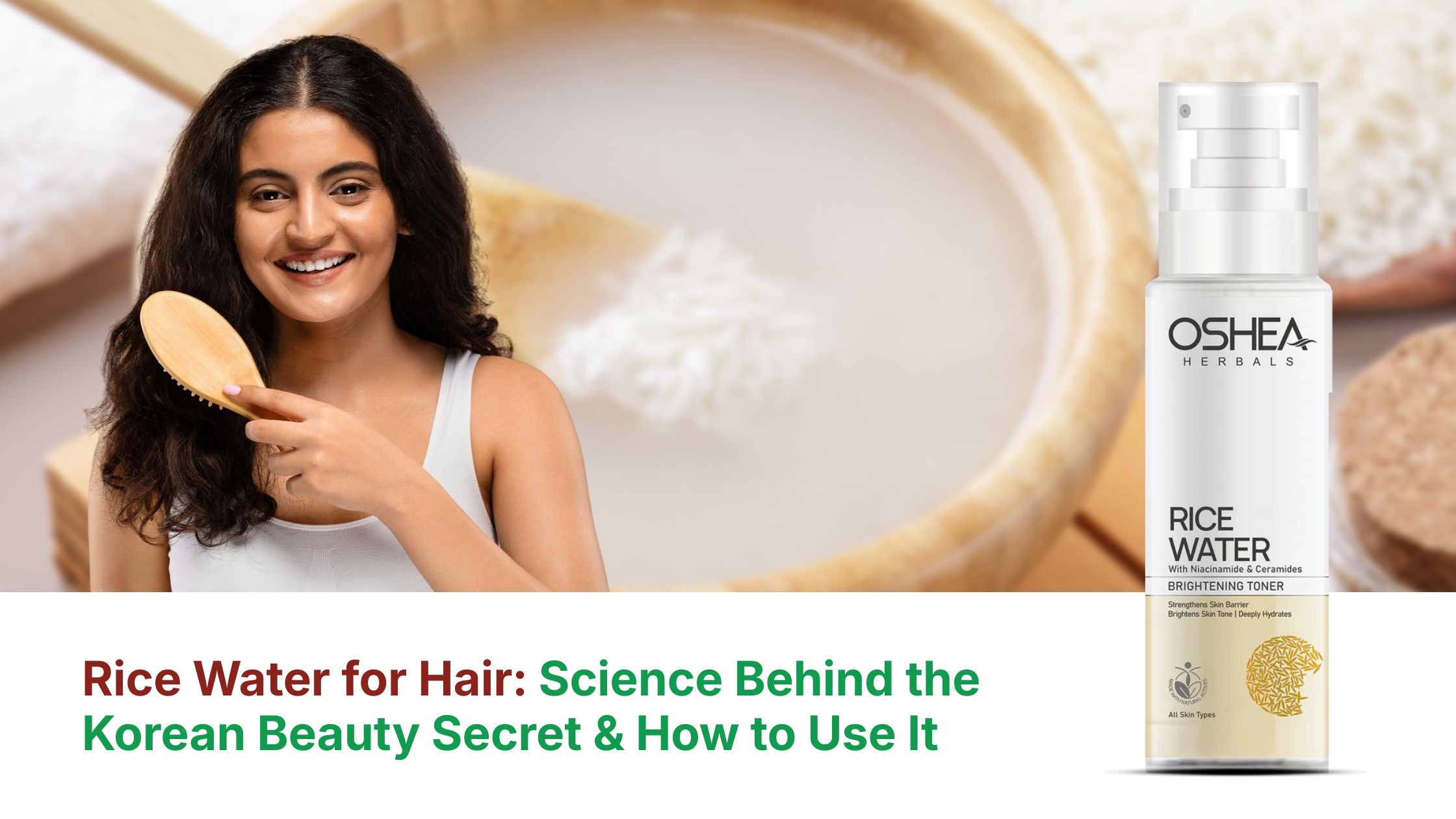
- Rice water contains inositol, amino acids, vitamins B and E, and antioxidants that directly nourish the hair shaft.
- Fermented rice water has a lower pH than plain water, improving cuticle alignment and boosting shine.
- Yuzuru women of Japan and Yao women of China have used rice water for centuries to maintain floor-length, healthy hair.
- Inositol is the only compound known to penetrate the hair and remain active even after rinsing, protecting future damage.
- Using rice water more than twice a week can cause protein overload, leading to stiffness in fine hair types.
- Ready-to-use rice water products such as toners and hair masks are a convenient, stable alternative to DIY preparations.
- What Is Rice Water and Why Is It Trending?
- The Science: What Rice Water Actually Contains
- Types of Rice Water: Plain, Soaked, Boiled, and Fermented
- Benefits of Rice Water for Hair
- How to Make Rice Water at Home
- How to Use Rice Water: Step-by-Step Guide
- Common Mistakes to Avoid
- Best Practices and Pro Tips
- Rice Water-Infused Products vs. DIY: What to Choose
- Who Benefits Most from Rice Water?
- Related Reading
- Frequently Asked Questions
Scroll through any Korean beauty routine or traditional Asian hair care guide and one ingredient keeps appearing: rice water. What was once a quiet kitchen practice among women in rural Japan and China has become one of the most searched hair care topics globally. But is the hype backed by science, or is this just another trend with a compelling backstory? At Oshea Herbals Hair Care, we believe your routine should be grounded in both tradition and evidence, which is exactly why we are breaking this down for you.
The story that sparked mainstream interest comes from the Yao women of Huangluo village in China, known for their extraordinary floor-length hair that shows little greying even into their 70s. Their generations-old secret: daily rinsing with fermented rice water. Similarly, court ladies in Heian-period Japan used rice water called "Yu-Su-Ru" to maintain their famously long, lustrous hair. These are not myths. They are documented practices with plausible biological mechanisms behind them. To learn more about our approach to herbal hair science, visit our Oshea Herbals About Us page.
Last reviewed: April 2026
1. What Is Rice Water and Why Is It Trending?
Rice water is simply the starchy water left behind after soaking or boiling rice. It is cloudy white in appearance, slightly viscous, and carries a mild, neutral smell when fresh. The substance has been used in Asian cultures for thousands of years, not just for hair but also for skin brightening and digestive health.
Its modern resurgence can be traced to the early 2010s, when beauty bloggers began sharing dramatic before-and-after results on YouTube and Instagram. The trend exploded further with the global spread of K-beauty and J-beauty culture, which placed rice at the centre of many iconic formulas. Today, rice water appears in toners, shampoos, conditioners, masks, and serums sold by brands around the world, including Oshea Herbals.
Traditional Record: The Yao women of Huangluo, China, collectively hold a Guinness World Record for the village with the world's longest hair, averaging 1.7 metres per person, attributed in part to their rice water hair care practice.
2. The Science: What Rice Water Actually Contains
The reason rice water works is not mystical. It is chemical. When rice is soaked or boiled, a range of biologically active compounds leach into the water. Understanding these compounds explains exactly why rice water delivers visible results.
Inositol: The Star Molecule
Inositol is a carbohydrate found abundantly in rice. What makes it remarkable for hair is its small molecular size, which allows it to penetrate deep into the hair cortex. A study published in the National Library of Medicine confirmed that inositol not only reduces surface friction and improves elasticity but remains inside the hair shaft even after rinsing, meaning it continues to work between washes. No other common hair care ingredient shares this "residual" protection property.
Amino Acids and Proteins
Rice water contains several amino acids, particularly arginine, which is a building block of keratin, the primary structural protein of hair. These amino acids help reinforce the hair's inner cortex and smooth the outer cuticle layer. This translates to visually smoother, shinier strands with reduced frizz.
B Vitamins, Vitamin E, and Antioxidants
B vitamins including B1, B3, and B6 nourish the scalp and may support the conditions needed for healthy follicle function. Vitamin E is a well-known antioxidant that protects hair cells from oxidative stress caused by UV exposure, pollution, and heat styling. Together, these create an environment more conducive to hair retention and growth.
Starch and Minerals
The starch in rice water adds body and texture to hair, particularly beneficial for limp or fine hair. Minerals such as magnesium, manganese, and phosphorus contribute to scalp health, though at the concentrations found in rice water, their effect is supportive rather than transformative on its own.
The concentration of active compounds in rice water varies based on rice variety, soaking time, temperature, and fermentation. Long-grain white rice and brown rice tend to yield higher inositol concentrations than short-grain varieties.
3. Types of Rice Water: Plain, Soaked, Boiled, and Fermented
| Type | Preparation | pH | Inositol Level | Best For |
|---|---|---|---|---|
| Plain soaked | Rinse rice, soak 30 min, strain | ~6.0 | Moderate | Quick use, sensitive scalps |
| Boiled | Cook rice in extra water, collect starchy water | ~5.5-6.5 | High | Dry, brittle hair needing protein |
| Fermented (24-48 hr) | Soak rice, leave at room temp, strain | ~4.0-4.5 | Highest (pitera added) | Growth, strength, shine, elasticity |
| Diluted fermented | Fermented water + 1 cup plain water | ~5.0 | Moderate-high | Fine or sensitive hair, first-time users |
Fermentation is key because it produces pitera, a compound generated by the yeast Saccharomyces ferment that is central to several premium Korean beauty serums. Fermentation also reduces the pH of rice water to approximately 4.0 to 4.5, which is closer to the natural pH of healthy hair (between 3.6 and 5.5). This acidic environment helps flatten the hair cuticle, sealing moisture in and reflecting light more effectively, which is why fermented rice water hair looks glossier than hair rinsed with plain water.
4. Benefits of Rice Water for Hair
Promotes Hair Growth
While rice water is not a clinically proven hair growth treatment in the same category as minoxidil, the amino acids and B vitamins it contains support a healthy scalp environment. Scalp health is directly linked to follicle activity. A well-nourished, inflammation-free scalp creates better conditions for the growth phase (anagen) of the hair cycle to proceed uninterrupted.
Reduces Breakage and Split Ends
The protein content of rice water temporarily reinforces the cuticle, making each strand more resistant to mechanical damage from brushing, detangling, and styling. In practice, people with chemically processed or heat-damaged hair report noticeably less breakage after consistent use.
Adds Shine and Reduces Frizz
The slightly acidic pH of fermented rice water smooths the cuticle layer. Light reflects more uniformly off a flat cuticle, creating the appearance of shine. Simultaneously, a sealed cuticle is less likely to absorb humidity from the air, reducing frizz significantly in humid Indian climates.
Detangles Hair
The amino acids and inositol reduce surface friction between strands, making rice water a natural slip agent. Hair treated with rice water is measurably easier to detangle, which reduces the number of strands lost during combing.
Strengthens Elasticity
Elasticity is the measure of how far hair can stretch without snapping. Healthy hair has good elasticity; damaged hair snaps quickly. Rice water improves elasticity by reinforcing the protein matrix inside the cortex, making hair more resilient under tension.
Research Note: A 2010 cosmetic science study found that inositol in rice water reduces hair surface friction by up to 40% and improves elasticity, with effects persisting after rinsing, unlike most topically applied conditioning agents.
5. How to Make Rice Water at Home
Basic Soaked Rice Water
Rinse one cup of rice to remove surface dust and pesticide residue. Add two to three cups of plain water and let it soak for 30 minutes to an hour. Strain the milky water into a clean bottle or jar. This can be used immediately or refrigerated for up to five days.
Fermented Rice Water (Recommended)
Follow the same soaking process above but leave the strained rice water at room temperature for 24 to 48 hours. You will notice a slightly sour, tangy smell, which indicates that beneficial fermentation has occurred. Before use, dilute the fermented water with one cup of plain water to avoid the acidity being too intense for the scalp. Store the remainder in the refrigerator and use within three days.
Add a few drops of rosemary essential oil or a tablespoon of aloe vera gel to your rice water to boost its scalp-stimulating and moisturising properties. Both pair well with the protein content of rice water without compromising its effectiveness.
Discover Oshea Herbals Rice Water Hair Products
Skip the DIY and get all the benefits of rice water in a dermatologically considered formula. From toners to hair masks, our rice water range is ready to use.
Shop Hair Care Range6. How to Use Rice Water: Step-by-Step Guide
As a Post-Shampoo Rinse
This is the most popular and effective method. Wash your hair with a gentle shampoo such as the Oshea Amlacare Hairfall Control Shampoo. Rinse out all the shampoo thoroughly. Pour or spray rice water generously over your scalp and hair, working it through from roots to tips. Leave it on for 15 to 30 minutes. Rinse with plain water, then apply your conditioner as usual.
As a Hair Mask
Mix fermented rice water with a tablespoon of coconut or castor oil and a tablespoon of your favourite conditioning agent. Apply to dry or damp hair, section by section. Cover with a shower cap and leave for 30 to 45 minutes before washing out. Alternatively, use a ready-formulated rice water-infused product for consistent results.
As a Scalp Spray
Diluted rice water can be used between washes as a scalp tonic. Pour it into a fine-mist spray bottle, apply to the scalp only, and gently massage in. Do not rinse. This method is particularly useful for people experiencing scalp dryness or dullness between wash days.
Combined with the Oshea Rice Water Toner
For those who prefer a stabilised, shelf-stable formula, the Oshea Herbals Rice Water Toner delivers the key benefits of rice water in a ready-to-apply format that does not require refrigeration or preparation time.
7. Common Mistakes to Avoid
Using It Too Frequently
Protein overload is real. When hair receives too much protein without adequate moisture, the strands become rigid and snap easily. This is most common in fine or low-porosity hair. Limit rice water use to once or twice a week, and always follow with a moisturising conditioner.
Skipping the Dilution Step
Fermented rice water has a pH of around 4.0, which can be drying and irritating to a sensitive scalp if used undiluted. Always dilute with at least an equal volume of plain water before application.
Not Rinsing Properly
Starch residue left on the hair can attract dirt and cause buildup, leading to dull, heavy strands. Rinse thoroughly after every rice water treatment.
If your hair becomes noticeably stiffer, harder to detangle, or develops a straw-like texture after using rice water, reduce frequency immediately and focus on deep moisture conditioning for at least two weeks before reintroducing rice water.
Using Old or Spoiled Batches
There is a difference between healthy fermentation (mildly sour smell) and spoilage (putrid, pungent odour). If your homemade rice water smells unpleasant rather than gently tangy, discard it. Using spoiled preparations can irritate the scalp.
8. Best Practices and Pro Tips
For consistent results, pair your rice water routine with a complete hair care system. Use a nourishing hair oil before washing to provide a protective barrier, then follow up with rice water post-shampoo, and finish with a quality conditioner such as the Oshea Avoshine Hair Conditioner to lock in moisture.
Scalp massage during rice water application enhances blood circulation to the follicles. Use the pads of your fingers and apply gentle circular pressure for two to three minutes. This amplifies the nutrient delivery from the rice water while providing a relaxing ritual.
If you use heat styling tools regularly, rice water applied as a rinse before heat exposure can act as a partial thermal buffer. The proteins coat the hair shaft and reduce the degree of moisture loss during blow-drying or straightening.
For colour-treated hair, fermented rice water can help maintain colour vibrancy. The acidic pH helps close the cuticle after colouring, sealing the colour pigment in and extending the life of your treatment, according to research published in the International Journal of Cosmetic Science.
9. Rice Water-Infused Products vs. DIY: What to Choose
Homemade rice water is accessible and cost-effective, but it comes with real limitations: inconsistent concentration, short shelf life, and no guarantee of sterile preparation. Professionally formulated rice water products address all of these shortcomings.
The Phytoderma Hair Growth Serum with Hydrolyzed Rice Protein from Oshea Herbals, for example, combines hydrolyzed rice protein (a more bioavailable form of rice-derived amino acids) with proven actives such as Redensyl and Baicapil. The hydrolysis process breaks rice protein into smaller fragments that penetrate the hair shaft more deeply than the whole proteins found in homemade rice water.
For scalp application between washes, the Rice Water Toner delivers consistent pH and concentration in a sprayable format. For a weekly treatment, pair it with the Hair Butter Spa for a complete strengthening ritual.
10. Who Benefits Most from Rice Water?
- Rice water contains inositol, a compound that penetrates and protects the hair from within, even after rinsing.
- Fermented rice water is more effective than plain rice water due to its lower pH and pitera content.
- Use rice water once or twice a week maximum to avoid protein overload, especially on fine or low-porosity hair.
- Always follow a rice water treatment with a moisturising conditioner to balance the protein and maintain elasticity.
- Ready-formulated products with hydrolyzed rice protein offer more consistent and deeper-penetrating results than DIY preparations.
- For scalp health, combine rice water use with regular scalp massage, a balanced diet, and a nourishing hair oil routine.
11. Related Reading
12. Frequently Asked Questions
How often should I use rice water on my hair?
For most hair types, once or twice a week is ideal. Overusing rice water can lead to protein overload, causing stiffness and breakage, especially in fine or low-porosity hair. Start with once a week and observe how your hair responds before increasing frequency.
Does fermented rice water work better than plain rice water?
Yes, fermented rice water has a lower pH and a higher concentration of pitera, a yeast-derived compound that supports cell renewal. Research and traditional practice both suggest fermented rice water delivers more noticeable improvements in shine, elasticity, and strength compared to plain rice water.
Can rice water cause hair loss?
Rice water itself does not cause hair loss. However, excessive use without proper conditioning can lead to protein buildup, making hair brittle and prone to breakage. Always follow a rice water rinse with a good moisturising conditioner and limit use to once or twice a week.
How long does homemade rice water last?
Plain soaked rice water can be stored in the refrigerator for up to five days. Fermented rice water is best used within three days of fermentation once it reaches your preferred level of tanginess. Always store in a sealed glass jar and discard if the smell becomes unpleasant rather than mildly sour.
Is rice water suitable for all hair types?
Rice water works for most hair types but requires adjustment. Thick, coarse, or high-porosity hair benefits greatly from the protein strengthening. Fine, low-porosity, or already protein-sensitive hair should use rice water sparingly and always follow up with deep conditioning to avoid stiffness.
Can I leave rice water in my hair overnight?
Leaving rice water in hair overnight is generally not recommended as prolonged exposure to the protein and starch can cause buildup and lead to brittleness. A rinse-out application of 15 to 30 minutes is sufficient for the active compounds to penetrate the hair shaft effectively.
What does inositol in rice water do for hair?
Inositol is a carbohydrate found naturally in rice water that has the unique ability to penetrate the hair shaft and remain even after rinsing. It repairs damage from within, reduces friction between strands, improves elasticity, and helps hair resist future breakage.
Do I need to shampoo after using rice water?
You do not need to shampoo after using rice water as a rinse or mask. Apply it after shampooing, leave it on for 15 to 30 minutes, rinse thoroughly with plain water, and then apply conditioner. However, if you apply rice water to dry hair before a wash, a gentle shampoo afterwards is fine.


