


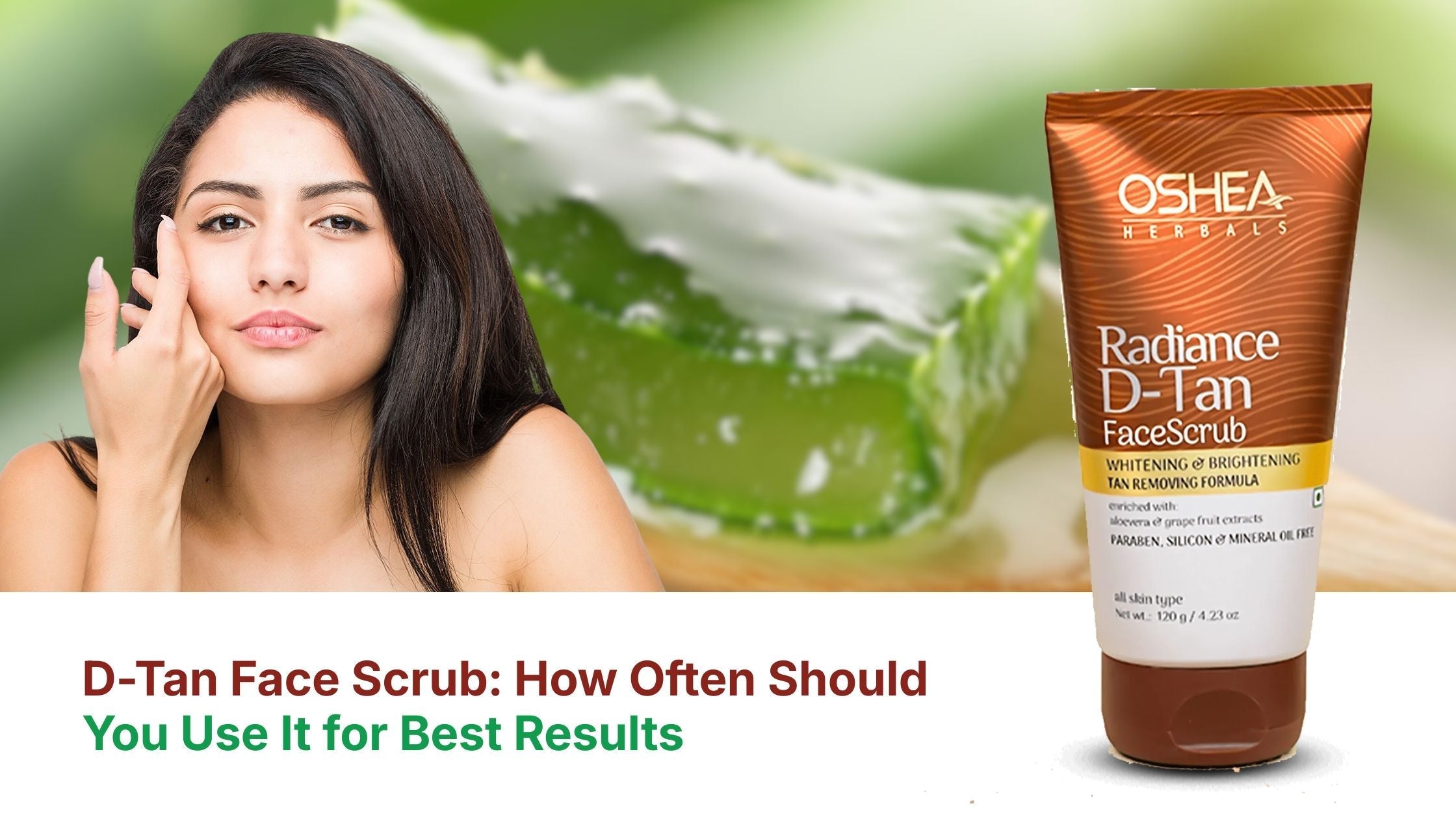
- Two to three times per week is the evidence-based optimal frequency for a D-Tan face scrub for most Indian skin types during summer.
- Over-scrubbing strips the skin barrier, causes post-inflammatory hyperpigmentation, and can worsen the uneven tone it is meant to correct.
- The Oshea Herbals Radiance D-Tan Face Scrub contains arbutin, licorice extract, and grapefruit extract for physical and chemical tan removal in one step.
- Evening use is preferred: exfoliation increases UV sensitivity for several hours afterward, making daytime scrubbing inadvisable.
- Always follow a D-Tan scrub with a hydrating toner and moisturiser to protect the freshly exfoliated skin surface overnight.
- Combine the scrub twice weekly with daily D-Tan facewash use and a weekly face pack for the most complete, layered de-tan routine.
- 1. Why Exfoliation Is the Cornerstone of Tan Removal
- 2. How a D-Tan Scrub Works Differently from a Regular Scrub
- 3. The Key Ingredients in Oshea's D-Tan Face Scrub
- 4. The Right Frequency for Every Skin Type
- 5. Step-by-Step Technique for Maximum Tan Removal
- 6. How to Choose the Right D-Tan Scrub
- 7. Common Exfoliation Mistakes and How to Avoid Them
- 8. Building the Complete D-Tan Routine Around Your Scrub
- 9. Expert Insights on Scrub Frequency and Efficacy
- 10. Who Benefits Most from D-Tan Face Scrub
- 11. Related Reading
- 12. Frequently Asked Questions
Among all the products in a de-tan routine, the face scrub is both the most immediately effective and the most commonly misused. Used correctly, a D-Tan face scrub physically removes the pigmented dead skin cells that constitute visible surface tan and simultaneously delivers active brightening ingredients directly to the freshly exposed skin layer beneath. Used too often, or with the wrong technique, it damages the skin barrier, triggers inflammation, and paradoxically produces the kind of uneven, reactive skin tone it is meant to reverse. The Oshea Herbals Radiance D-Tan Face Scrub with arbutin, licorice extract, and grapefruit extract is designed for twice-weekly use, the frequency that delivers consistent tan removal without over-exfoliation. Explore the full Radiance D-Tan Range for a complete layered de-tan system.
At Oshea Herbals, our guidance on scrub frequency is not arbitrary. It is based on the skin's natural cell turnover cycle, the rate of melanin accumulation from Indian summer UV, and the documented evidence on exfoliation tolerance across Indian skin types.
Last reviewed: March 2026
1. Why Exfoliation Is the Cornerstone of Tan Removal
Sun tan is essentially a melanin overload in the skin's uppermost layers. When UV rays stimulate melanocytes to produce more pigment, that melanin is deposited in the keratinocytes of the stratum corneum and the living epidermis just below it. The skin's natural cell turnover cycle gradually moves these melanin-laden cells upward and eventually sheds them from the surface, which is why tan fades naturally over weeks without treatment.
Physical exfoliation with a D-Tan scrub dramatically accelerates this process. By mechanically removing the outermost pigmented cells and stimulating increased cell turnover, a scrub effectively fast-forwards the natural tan-fading timeline. What would naturally take 4 to 6 weeks of skin renewal takes 2 to 3 weeks with consistent twice-weekly scrubbing combined with daily de-tan facewash use.
Cell turnover context: The skin renews itself every 21 to 28 days on the face. Each exfoliation session removes 2 to 7 days of dead cell buildup depending on the scrub's abrasiveness and pressure used. Twice-weekly scrubbing is calibrated to remove accumulated dead cells without disrupting the formation of new cells below, maintaining the cycle's productive balance.
2. How a D-Tan Scrub Works Differently from a Regular Scrub
A standard face scrub achieves exfoliation through physical abrasion: fine particles remove dead surface cells and the dirt, sebum, and product residue bound to them. A regular scrub does not actively target melanin or address the biochemical mechanisms that produced the tan.
A D-Tan scrub adds a chemical exfoliation dimension to the physical one. The active brightening ingredients in a D-Tan formula, typically tyrosinase inhibitors and antioxidants like arbutin, licorice, and grapefruit extract, are released from the formula during the scrubbing contact time. Because exfoliation temporarily opens the skin's surface and the freshly scraped area is highly receptive to actives, these brightening compounds penetrate more effectively than they would applied in a non-exfoliating product. This dual action, physical removal of surface pigmentation plus chemical inhibition of ongoing melanin production, is what separates a D-Tan scrub from a plain exfoliant in terms of visible tan removal speed.
The physical and chemical exfoliation in a D-Tan scrub are synergistic but require the correct contact time to work. Massaging the scrub onto the face for the recommended 60 seconds before rinsing allows both the physical beads and the active ingredients adequate time to work. A quick 15-second scrub and rinse delivers primarily physical exfoliation with minimal chemical benefit from the brightening actives.
3. The Key Ingredients in Oshea's D-Tan Face Scrub
| Ingredient | Type | Primary Action on Tan | Additional Benefit |
|---|---|---|---|
| Arbutin | Chemical brightener | Tyrosinase inhibition, reduces melanin synthesis | Gentle on all skin types, including sensitive |
| Licorice Extract (Glabridin) | Chemical depigmenter | Dual tyrosinase inhibition, UVB-induced melanin reduction | Anti-inflammatory, oil production control |
| Grapefruit Extract | AHA source, antioxidant | Mild chemical exfoliation, free radical neutralisation | Astringent pore-tightening, brightening |
| Physical Exfoliant Beads | Mechanical exfoliator | Physical removal of pigmented surface cells | Improves skin texture and product absorption |
Arbutin: The Gentle Tyrosinase Blocker
Arbutin is a naturally derived glycoside that releases hydroquinone at a slow, controlled rate directly at the skin surface, inhibiting tyrosinase without the systemic risks associated with hydroquinone itself at higher concentrations. Research published in the Journal of Pharmacology and Experimental Therapeutics confirmed that arbutin produces dose-dependent inhibition of melanin synthesis in melanocyte cultures, making it one of the most reliably effective and well-tolerated brightening ingredients in dermatological research. Its gentleness makes it suitable for all skin types including sensitive skin, which is critical for a twice-weekly scrub formula.
Licorice Extract: The Dual Brightener
Glabridin from licorice root inhibits tyrosinase through a mechanism distinct from arbutin's, targeting the enzyme's catecholase activity while also reducing the UVB-induced pigmentation response. This dual pathway means licorice and arbutin together produce a more comprehensive anti-melanogenesis effect than either alone. Additionally, licorice's liquiritin compound disperses existing melanin deposits, actively lightening existing pigmentation rather than only preventing new formation.
4. The Right Frequency for Every Skin Type
The optimal scrub frequency is not one-size-fits-all. It depends on your skin type, the current level of tan, and the sensitivity of your skin's barrier. Using the correct frequency for your skin type is as important as using the right product.
Oily Skin: Up to Three Times Per Week
Oily skin has a more robust barrier due to higher sebum production, which means it can tolerate exfoliation more frequently than dry or sensitive skin. Three times per week (for example, Monday, Wednesday, and Saturday) delivers faster tan removal while the additional sebum production between sessions replenishes the barrier. Watch for any signs of over-exfoliation (increased breakouts, redness, or tightness) and reduce to twice weekly if these appear.
Normal and Combination Skin: Twice Per Week
Twice weekly is the sweet spot for most normal and combination skin types. This frequency removes sufficient dead cell buildup to visibly accelerate tan removal without depleting the barrier's natural lipid replenishment capacity. Space sessions at least two to three days apart, rather than consecutive days, to allow the barrier to recover between each exfoliation.
Dry Skin: Once Per Week
Dry skin has a thinner barrier and slower sebum replenishment, making it more vulnerable to over-exfoliation. Once per week is appropriate for dry skin during active tan removal. Combine with the D-Tan Facewash used twice daily for the daily chemical exfoliation component without adding additional physical exfoliation stress.
Sensitive Skin: Once Per Week or Less
Sensitive skin reacts to physical exfoliation with redness and irritation more readily than other types. Once per week maximum, with very light pressure and a 30-second massage time rather than the standard 60 seconds. On weeks when the skin is particularly reactive (during hormonal fluctuations, after travel, or during seasonal transitions), skip the scrub entirely and rely on the D-Tan facewash alone.
Brighten Faster with the Complete D-Tan Routine
Pair the Radiance D-Tan Face Scrub with the D-Tan Facewash and D-Tan Face Pack for a three-step system that addresses tan at every depth and frequency point of your routine.
Shop the D-Tan Range5. Step-by-Step Technique for Maximum Tan Removal
Pre-Scrub Preparation
Always cleanse the face first with your regular facewash before scrubbing. Applying a scrub to a surface covered in sunscreen, makeup, or the day's pollution and sebum reduces the scrub's contact with the actual skin cells beneath. A clean, damp surface allows the scrub's abrasive particles and active ingredients to work directly on the skin surface without interference.
Application Technique
Take a coin-sized amount of the Radiance D-Tan Face Scrub on slightly damp fingertips. Apply to the face and neck, avoiding the eye area. Using the pads of your fingertips (never nails), massage in slow, gentle circular motions for 60 seconds. Apply light pressure. The exfoliation is performed by the scrub particles, not by the pressure of your fingers. Hard scrubbing causes micro-tears in the skin surface and triggers post-inflammatory hyperpigmentation that makes uneven tone worse, not better.
Focus Areas and Rinse
Spend slightly more time on areas with visible tan lines: the sides of the face near the ears (common tan line zone), the forehead, and the neck. Rinse thoroughly with cool water and pat dry gently with a clean towel. Do not rub the towel across the face after exfoliation; the skin is temporarily sensitised and rubbing adds unnecessary friction.
For significantly faster tan removal, use the D-Tan scrub immediately before applying the Radiance D-Tan Face Pack. Freshly exfoliated skin absorbs the face pack's concentrated arbutin, aloe vera, mulberry, and licorice actives far more effectively than unabraded skin. This scrub-then-pack combination on the same evening produces the single highest-impact de-tan treatment possible in an at-home routine.
6. How to Choose the Right D-Tan Scrub
Particle Size and Roundness
Look for scrubs with fine, rounded particles rather than jagged or irregularly shaped exfoliants. Sharp exfoliant particles (commonly found in apricot kernel-based scrubs) create microscopic tears in the skin surface that cause chronic low-level inflammation. Rounded particles provide effective exfoliation through gentle abrasion without tearing. The Oshea D-Tan scrub uses exfoliant particles calibrated for safe twice-weekly facial use.
Active Brightening Ingredients
A scrub without brightening actives provides physical exfoliation but misses the chemical tan-removal dimension. Prioritise scrubs containing arbutin, licorice, kojic acid, or grapefruit extract alongside the physical exfoliants. These ensure that the contact time during scrubbing delivers active anti-melanogenesis compounds to the freshly opened skin surface.
Avoiding Harsh Additives
Avoid scrubs with high concentrations of alcohol, synthetic fragrance, or bleaching agents. These can cause dryness, irritation, and in the case of harsh bleaches, paradoxical post-inflammatory darkening when used too frequently. Herbal-formulated scrubs with natural exfoliants and botanical actives are the safest choice for the twice-weekly frequency appropriate to active tan removal.
7. Common Exfoliation Mistakes and How to Avoid Them
Over-Scrubbing
The most common mistake is scrubbing too frequently in the belief that more exfoliation means faster tan removal. In practice, over-exfoliation disrupts the skin barrier, triggers inflammatory signals, and produces reactive hyperpigmentation that creates the appearance of a patchy, darker complexion. The skin's pigmentation response to inflammation, called post-inflammatory hyperpigmentation (PIH), can be darker and more persistent than the original sun tan. Stick to the frequency recommendation for your skin type.
Scrubbing Over Sunburned Skin
Never use a scrub on sunburned or actively irritated skin. Sunburned skin is inflamed and the barrier is already compromised. Physical exfoliation worsens the damage, increases risk of infection, and produces severe PIH. Wait until sunburn has fully healed (typically 5 to 7 days for mild sunburn) before resuming scrub use.
Do not combine D-Tan face scrub use with other exfoliating products on the same day. If you use a chemical exfoliant, AHA serum, retinol, or any other exfoliating treatment, do not use the scrub on that day. Combining physical and chemical exfoliation in the same session overwhelms the skin barrier and causes the over-exfoliation damage described above. Alternate your scrub days with chemical exfoliant days for the safest, most effective exfoliation programme.
Skipping Moisturisation After Scrubbing
Post-scrub skin is temporarily vulnerable. The barrier's outermost layer has just been removed. Applying a hydrating toner and moisturiser immediately after scrubbing prevents TEWL, soothes any minor irritation from the exfoliation, and creates the protected, hydrated surface environment in which the skin's renewal cycle functions most efficiently overnight.
8. Building the Complete D-Tan Routine Around Your Scrub
The D-Tan face scrub is most effective positioned within a complete layered de-tan system rather than used in isolation. The most results-effective routine for Indian summer tan removal works as follows.
Daily (morning and evening): cleanse with the Radiance D-Tan Facewash for consistent daily delivery of AHA botanicals and sebum control. This is the foundation of your routine's frequency. Two to three evenings per week: replace the standard evening cleanse with the Radiance D-Tan Face Scrub for physical exfoliation and deeper brightening active delivery. Once per week: apply the Radiance D-Tan Face Pack immediately after a scrub session for concentrated arbutin, mulberry, and licorice penetration into freshly exfoliated skin. Always in the morning: apply a broad-spectrum sunscreen from the Oshea sun protection range as the final step before going outdoors.
9. Expert Insights on Scrub Frequency and Efficacy
Research on exfoliation frequency and skin health outcomes consistently points to the same conclusion: the optimal frequency is the highest frequency at which the skin's barrier remains intact and non-reactive. This varies between individuals, but across Indian skin type populations, twice weekly is the modal recommendation that balances efficacy against barrier protection.
A review of exfoliation outcomes in Indian skin types published in the Indian Journal of Dermatology found that physical exfoliation twice weekly produced significantly faster improvement in melanin index scores compared to once-weekly exfoliation, but that three times weekly produced comparable improvement to twice weekly while showing higher incidence of post-exfoliation barrier disruption. This supports twice weekly as the optimally efficient frequency for most skin types.
Arbutin research: A controlled clinical trial reviewed in a PubMed publication on depigmentation agents found that arbutin at 3 percent concentration produced measurable reduction in melanin index over 4 weeks when applied twice daily. When incorporated into an exfoliating product used twice weekly, the delivery advantage of applying arbutin to a freshly exfoliated surface further enhances its penetration and efficacy, suggesting the scrub format is one of the most effective vehicles for arbutin in a de-tan routine.
For the fastest visible results from a D-Tan scrub, the key variable is not how hard you scrub but how consistently you follow the post-scrub moisturisation and daily facewash steps. The scrub initiates the tan removal process; the facewash maintains it between sessions; the face pack intensifies it weekly; and the moisturiser preserves the barrier that makes all three steps more effective. Scrubbing aggressively without these flanking steps produces slower results with more skin stress.
10. Who Benefits Most from D-Tan Face Scrub
- Two to three times per week is the optimal D-Tan scrub frequency for oily and normal skin; once per week for dry or sensitive skin.
- The D-Tan scrub's arbutin, licorice, and grapefruit actives deliver chemical brightening during the contact time of physical exfoliation for dual-action tan removal.
- Always use in the evening to avoid the post-exfoliation UV-sensitivity window during daylight hours.
- Pair scrub sessions immediately with a D-Tan face pack application for enhanced active penetration into freshly exfoliated skin.
- Follow every scrub with a toner and moisturiser to protect the temporarily vulnerable freshly exfoliated surface.
- Combine the scrub with a daily D-Tan facewash routine for cumulative tan removal that works between and on scrub days simultaneously.
11. Related Reading
12. Frequently Asked Questions
How often should I use D-Tan face scrub for tan removal?
For most skin types, using a D-Tan face scrub two to three times per week delivers the best results for tan removal without over-exfoliating. Oily skin can tolerate three times per week. Normal and combination skin does best at two times per week. Dry or sensitive skin should limit use to once per week and monitor for any irritation.
Can I use a D-Tan scrub every day?
No. Daily physical exfoliation with a scrub strips the skin's natural lipid barrier, causes micro-inflammation, and can worsen pigmentation over time through post-inflammatory hyperpigmentation. Two to three times per week is the evidence-based maximum. For daily exfoliation, use a D-Tan facewash with mild AHA botanicals instead.
What time of day is best to use a D-Tan face scrub?
Evening is the best time to use a D-Tan face scrub. Exfoliation temporarily increases skin sensitivity to UV radiation for several hours after use. Using a scrub in the evening avoids this UV-sensitised window during daylight hours. Follow the evening scrub with a hydrating toner and moisturiser to support overnight skin recovery.
Can I use a D-Tan scrub on active acne?
Avoid using any physical scrub on skin with active, inflamed acne lesions. Mechanical exfoliation over active breakouts can rupture pimples, spread bacteria, and worsen scarring. Wait until the active breakout has resolved before resuming scrub use. For acne-prone skin during an active outbreak, use the Oshea Acne collection for targeted treatment.
Should I apply moisturiser after a D-Tan scrub?
Yes, always. Exfoliation removes the outermost layer of dead skin cells and temporarily disrupts the skin's moisture barrier. Applying a hydrating toner and moisturiser immediately after scrubbing replenishes moisture and helps freshly exposed skin cells maintain hydration. Skipping moisturisation after a scrub leaves skin tight, reactive, and more vulnerable to further irritation.
Is D-Tan scrub safe for sensitive skin?
Sensitive skin can use a D-Tan scrub at reduced frequency, once per week maximum. Apply with very light pressure and limit the massage time to 30 to 45 seconds. If redness or irritation persists after scrubbing, reduce to once per fortnight and focus on chemical exfoliation through a D-Tan facewash for daily active de-tan support.
What ingredients should I look for in a D-Tan face scrub?
The most effective D-Tan scrubs combine physical exfoliation with active brightening ingredients. Look for arbutin for tyrosinase inhibition, licorice extract for depigmentation, grapefruit extract for antioxidant action, and fine physical exfoliants that are gentle enough for twice-weekly facial use.
Can I use D-Tan scrub and D-Tan face pack on the same day?
Yes, but sequence them correctly. Use the scrub first to exfoliate, then apply the face pack to freshly exfoliated skin. This sequence maximises the active ingredients in the face pack by allowing them to penetrate more effectively into the freshly cleared surface.


