



Introduction: Understanding Acne and Exfoliating Cleansers
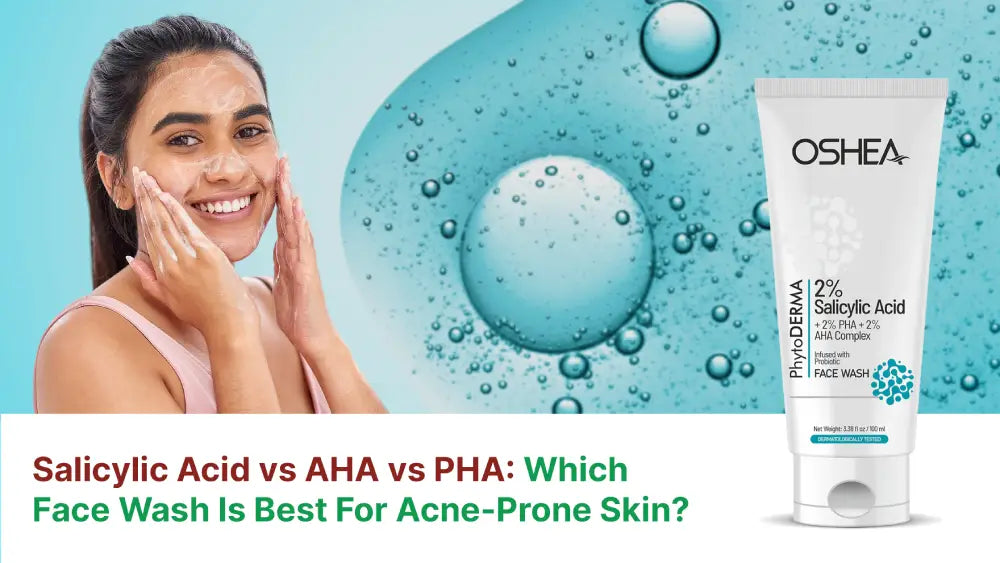
Acne-prone skin is driven by more than surface-level oiliness. It is shaped by clogged pores, irregular skin cell turnover, inflammation, and microbial imbalance. The face wash used daily plays a decisive role in managing these factors. When exfoliating acids such as Salicylic Acid, AHAs, and PHAs are involved, the cleanser becomes an active treatment rather than a passive step.
What Makes Acne-Prone Skin Different
Acne-prone skin exhibits excessive sebum production and abnormal desquamation. Dead skin cells accumulate within follicles, forming comedones that later evolve into inflammatory acne. This skin type requires targeted cleansing that reaches inside pores while maintaining barrier stability.
Why Face Wash Selection Matters More Than You Think
A face wash determines how effectively oil, debris, and dead skin cells are removed. Cleansers containing Salicylic Acid or other exfoliating acids actively influence pore health, inflammation levels, and breakout frequency. An unsuitable cleanser can disrupt the acid mantle, leading to irritation and rebound oil secretion.
Chemical Exfoliants Explained in Simple Terms
Chemical exfoliants loosen the bonds between dead skin cells, allowing controlled shedding. Unlike abrasive scrubs, they work uniformly and penetrate microscopic pore structures. Salicylic Acid, AHAs, and PHAs differ in solubility, molecular size, and exfoliation depth, making each suitable for different acne profiles.
What Is Salicylic Acid
Salicylic Acid is a beta hydroxy acid derived from botanical sources. Its oil-soluble structure allows it to move through sebum and enter clogged pores, making Salicylic Acid especially effective for acne-prone skin.
How Salicylic Acid Works at a Cellular Level
Salicylic Acid dissolves keratin plugs by disrupting intercellular cohesion inside the follicle. It penetrates lipid-rich pores, clears congestion, and reduces inflammatory mediators. This multi-level action distinguishes Salicylic Acid from surface-only exfoliants.
Benefits of Salicylic Acid for Acne-Prone Skin
Salicylic Acid unclogs pores, controls excess oil, reduces active breakouts, and prevents future lesions. In face washes, Salicylic Acid provides consistent maintenance exfoliation without overwhelming the skin, making it ideal for long-term acne management.
Limitations and Precautions of Salicylic Acid
Excessive use of Salicylic Acid can compromise the skin barrier, causing dryness or peeling. Acne-prone skin with sensitivity should introduce Salicylic Acid gradually and pair it with hydrating, barrier-repairing ingredients.
What Are AHAs (Alpha Hydroxy Acids)
AHAs are water-soluble exfoliating acids such as glycolic acid and lactic acid. They primarily act on the skin surface rather than penetrating pores.
How AHAs Function on the Skin Surface
AHAs exfoliate by loosening the bonds between dead cells on the epidermis. This accelerates skin renewal and improves smoothness. Unlike Salicylic Acid, AHAs do not dissolve oil inside pores.
Benefits of AHAs for Acne and Texture
AHAs help refine rough texture, brighten dull skin, and fade post-acne marks. They are useful for acne-prone skin affected by uneven tone rather than persistent congestion.
Drawbacks of AHAs for Acne-Prone Skin
AHAs can increase irritation and photosensitivity. In acne-prone skin with active inflammation, AHAs may aggravate redness and compromise tolerance when compared to Salicylic Acid.
What Are PHAs (Polyhydroxy Acids)
PHAs are larger-molecule exfoliating acids designed for enhanced gentleness. Their slow penetration makes them suitable for sensitive skin types.
How PHAs Differ Structurally From AHAs
PHAs contain multiple hydroxyl groups, increasing water retention and antioxidant capacity. This structure allows gradual exfoliation while supporting hydration.
Benefits of PHAs for Sensitive Acne-Prone Skin
PHAs gently smooth skin, improve texture, and reinforce barrier health. They are suitable for acne-prone skin that reacts negatively to Salicylic Acid or stronger AHAs.
Limitations of PHAs
PHAs lack the pore-clearing efficacy of Salicylic Acid. They are less effective for blackheads, whiteheads, and deep congestion, making them supportive rather than primary acne treatments.
Salicylic Acid vs AHA vs PHA: Core Differences
The key difference lies in penetration depth and oil solubility. Salicylic Acid works inside pores, AHAs act on the surface, and PHAs focus on gentle renewal. Acne-prone skin benefits most from actives that address follicular congestion directly.
Salicylic Acid vs AHA vs PHA in Face Washes
| Parameter | Salicylic Acid | AHA | PHA |
|---|---|---|---|
| Solubility | Oil-soluble | Water-soluble | Water-soluble |
| Depth of Action | Inside pores | Surface level | Surface level |
| Best Acne Type | Blackheads, whiteheads, and inflamed acne | Mild acne, pigmentation | Sensitive acne |
| Irritation Potential | Moderate | Moderate to high | Low |
| Barrier Support | Moderate | Low | High |
Which Face Wash Is Best for Oily Acne-Prone Skin
Oily acne-prone skin responds best to Salicylic Acid face washes. The oil-soluble nature of Salicylic Acid ensures deep pore cleansing, reduces shine, and prevents buildup that leads to breakouts.
Which Face Wash Is Best for Dry Acne-Prone Skin
Dry acne-prone skin may tolerate low-strength Salicylic Acid combined with humectants. PHAs offer an alternative when dryness dominates, although they may not fully address pore congestion.
Which Face Wash Is Best for Sensitive Acne-Prone Skin
Sensitive acne-prone skin benefits from PHAs due to their low irritation profile. If needed, Salicylic Acid can be introduced carefully at minimal concentrations to maintain pore clarity.
How to Choose the Right Exfoliating Face Wash
Selection depends on acne severity, oil production, and tolerance. Salicylic Acid remains the most effective option for true acne-prone skin, while AHAs and PHAs serve niche roles based on sensitivity and surface concerns.
How Often Should Acne-Prone Skin Use Exfoliating Cleansers
Salicylic Acid face washes are typically suitable for once or twice daily use, depending on formulation strength. AHAs and PHAs are better suited for once-daily cleansing to avoid over-exfoliation.
Final Verdict: Salicylic Acid vs AHA vs PHA
For acne-prone skin, Salicylic Acid offers the most comprehensive benefits. Its pore-penetrating action, oil-regulating capacity, and anti-inflammatory properties make Salicylic Acid the superior choice in acne-focused face washes. AHAs enhance surface renewal, and PHAs provide gentle maintenance, but Salicylic Acid remains the cornerstone for effective acne cleansing.


